JCS chief vows unwavering response to North Korean border incursions
North Korea's latest threats may be a ploy to undermine South Korea's border security operations and cement the division of the Korean Peninsula into two permanently separate states, experts said Tuesday, as Seoul's top military officer warned of a firm response to any further provocations by Pyongyang.
Kim Yo-jong, North Korean leader Kim Jong-un's sister, on Monday, accused Seoul of escalating tensions near the Military Demarcation Line, describing the situation as "very unstable" and threatening to reinforce tactical strike capabilities and resume loudspeaker broadcasts directed at the South.
Lim Eul-chul, a professor at Kyungnam University's Institute for Far Eastern Studies, said Kim Yo-jong's latest statement appeared "primarily intended to neutralize South Korea's military responses to North Korean activities near the MDL, allowing Pyongyang to complete its border fortifications without interference."
According to Lim, South Korea's warning broadcasts and warning shots against North Korean troops approaching or crossing the MDL have become a significant impediment to Pyongyang's efforts to fortify its southern border. He said the North was seeking to portray these routine security measures as military provocations to pressure Seoul into easing its responses, potentially allowing North Korean troops to proceed with border fortifications without interference.
According to the Joint Chiefs of Staff, North Korean troops crossed the MDL approximately 50 times in August and September. Kim Yo-jong claimed Monday that South Korea had conducted 2,870 rounds of loudspeaker broadcasts and fired 201 warning shots between Aug. 1 and Oct. 17, accusing Seoul of crossing a "red line" following what she called a fabricated mine explosion incident.
By portraying Seoul's actions as provocations and threats to North Korean personnel, Pyongyang is seeking to justify its border fortification activities as legitimate acts of self-defense while laying the groundwork to blame Seoul for any future military clashes, Lim said.
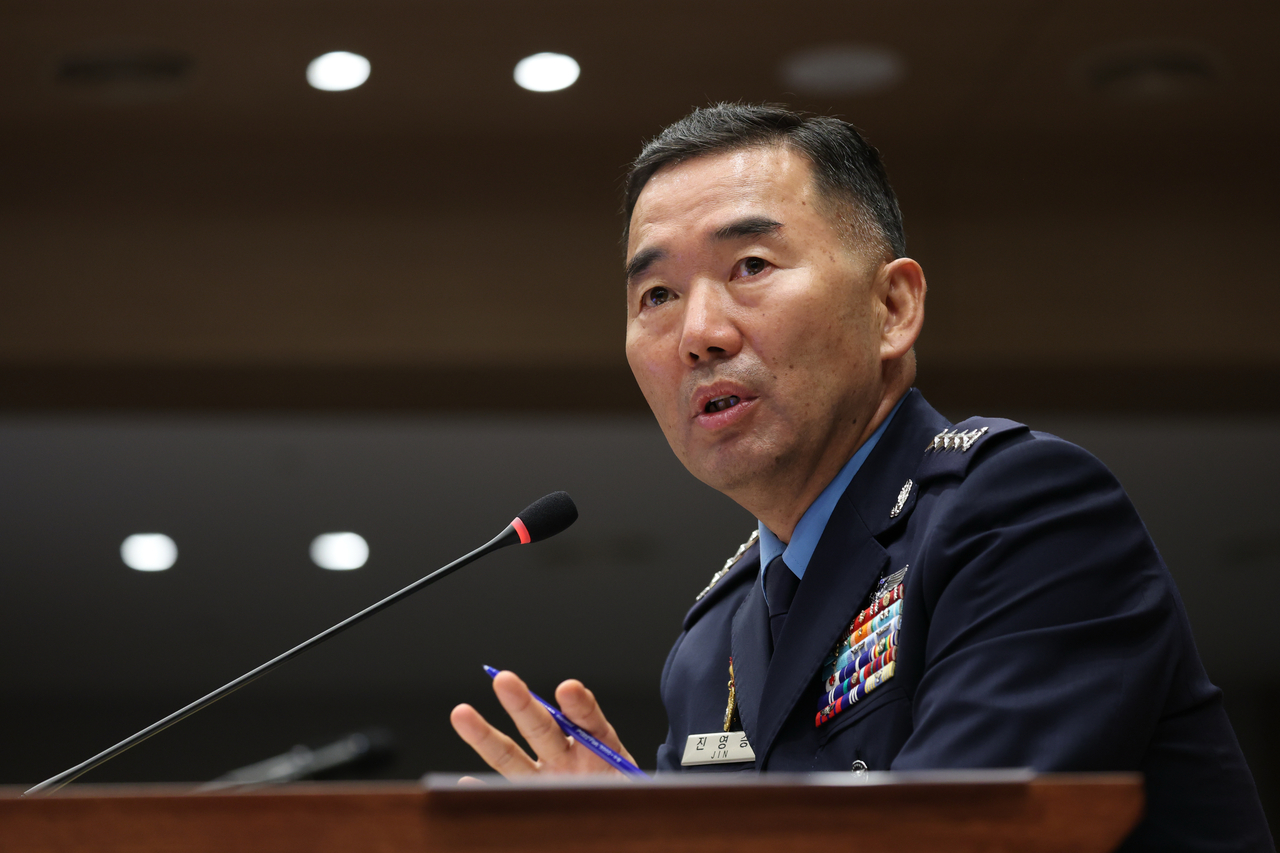
JCS Chair Gen. Jin Yong-sung rejected Pyongyang's accusations during a visit Tuesday to a frontline corps responsible for the central section of the inter-Korean border, where he inspected military readiness and presided over a meeting of operational commanders.
"It is unacceptable that North Korea yesterday brazenly attempted to shift responsibility for escalating military tensions onto our military by portraying our legitimate operational measures as provocations," Jin said, according to the JCS.
"If the enemy carries out further provocations under the pretext of our military's legitimate actions, respond firmly," he instructed commanders.
Jin also reiterated Seoul's assessment that North Korea was responsible for the Sept. 21 explosion of two land mines inside the Demilitarized Zone that injured three South Korean soldiers, two of them seriously.
"The enemy's planting of land mines south of the Military Demarcation Line, which seriously injured our service members while they were carrying out legitimate operations, constitutes a clear act of provocation and a violation of the Armistice Agreement," he said.
North Korea has repeatedly denied responsibility for the explosions, rejecting Seoul's findings that the land mines deliberately planted south of the MDL caused the blast.
The JCS chief said he had assessed the security situation following the explosions, noting that North Korean troops had continued operating near the MDL, and reviewed operational responses with the Ground Operations Command chief and frontline corps commanders.
He stressed that South Korea's military had consistently responded to North Korean violations of the Armistice Agreement, including incursions across the MDL, in accordance with established principles and procedures.
Jin pledged to maintain that approach while pressing ahead with operations aimed at strengthening South Korea's operational control within the DMZ.
Seoul's Defense Ministry echoed Jin's warning, saying it would respond firmly to any further North Korean provocations and expressing "grave concern" over Kim Yo-jong's criticism of South Korea's legitimate military operations and her threats to escalate tensions.
The ministry defended its warning broadcasts and warning shots near the MDL as legitimate defensive measures to prevent North Korean incursions or compel troops to withdraw. It also urged Pyongyang to cease its "groundless claims" and border violations and work toward resolving differences in the two sides' understanding of the MDL.
South Korea's Unification Ministry, meanwhile, struck a more measured tone, calling for mutual respect and the establishment of communication channels to prevent further military confrontations, while urging Pyongyang to cease activities that violate the Armistice Agreement.
"To ease tensions between the two Koreas and stabilize the situation, what is needed is mutual respect and consideration, rather than unilateral warnings and threats," the ministry said in a Tuesday statement responding to Kim's remarks.
"Furthermore, North Korea must immediately cease actions near the Military Demarcation Line that violate the Armistice Agreement."
The ministry stressed the need for the two Koreas to reconcile their differing positions on the MDL and promptly establish communication mechanisms for its peaceful management.
"We urge North Korea to actively respond to efforts to prevent unnecessary escalation and pursue effective solutions to the situation," it said.
Experts warned that North Korea appeared to be placing Seoul in a strategic dilemma.
If South Korea suspends warning shots, Pyongyang could proceed with fortifying the DMZ largely unimpeded, potentially turning what it calls its "new southern border" into a permanent boundary, according to Lim.
Conversely, if the South Korean military maintains its warning measures, North Korea could use them as a pretext to deploy additional tactical nuclear-capable weapons along the frontline, he said.
Lim said that Pyongyang's overriding objective was to neutralize South Korea's border security responses, complete the physical fortification of its southern border and establish a permanent boundary that would cement the division of the Korean Peninsula into two separate states.
Yang Moo-jin, a distinguished professor at the University of North Korean Studies in Seoul, said that Kim's repeated references to measures being considered or reviewed suggested that Pyongyang was seeking to calibrate its response while leaving room for further escalation.
He said North Korea appeared to be using South Korea's warning broadcasts and warning shots to justify both its military buildup and its policy of treating the two Koreas as hostile states.
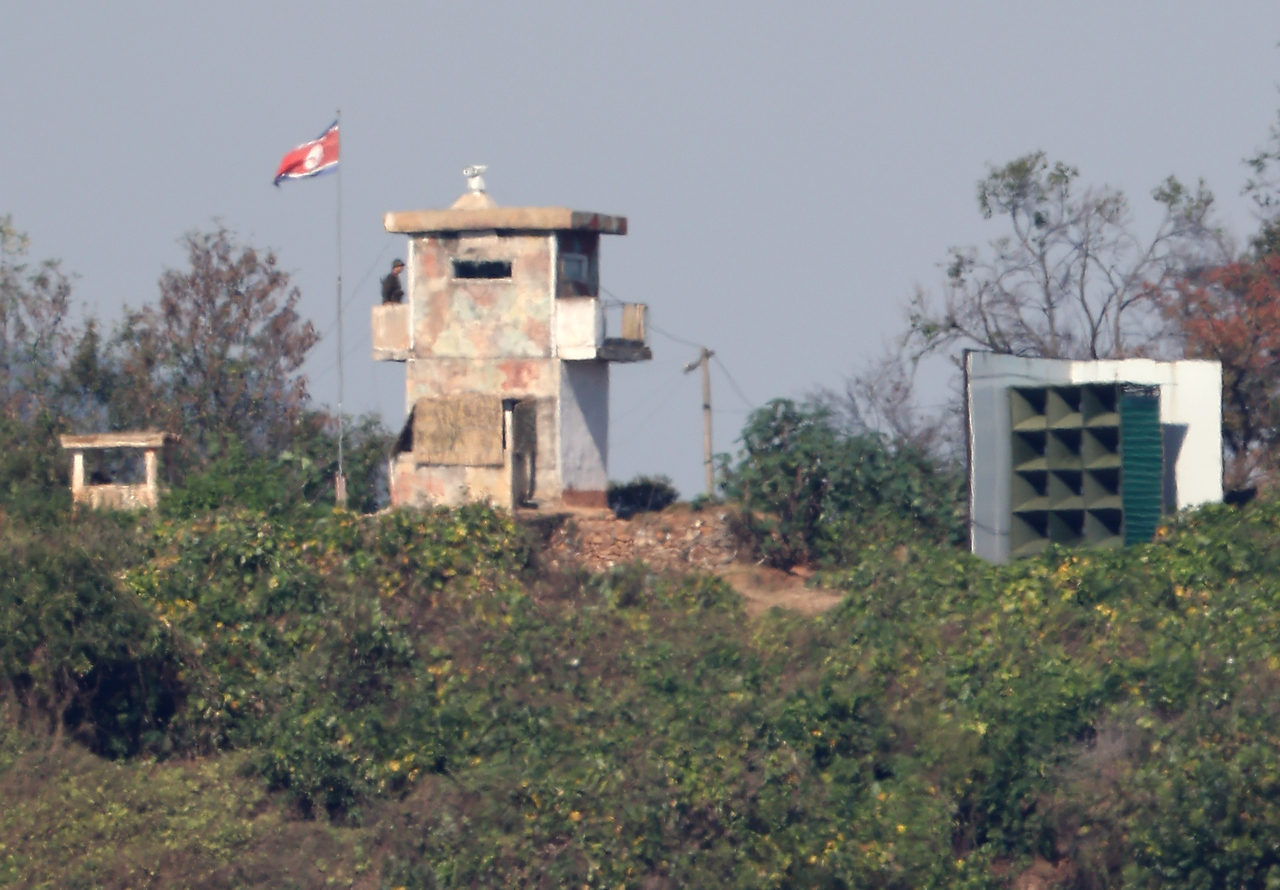
Yang also drew a distinction between the warning loudspeakers currently used by South Korean troops near the border and the psychological warfare loudspeakers previously deployed along the frontier.
"The broadcasts criticized by Pyongyang refer to warning and notification systems installed at frontline guard posts, rather than the psychological warfare loudspeakers at general outposts," he said.
North Korea's threatened resumption of broadcasts, by contrast, appeared to refer to psychological warfare operations directed at the South, potentially involving loud, disruptive noise.
Yang cautioned that escalating tensions in the absence of inter-Korean communication channels could increase the risk of an accidental military confrontation, particularly as prolonged heightened alert levels contribute to fatigue among frontline troops.
He also urged political leaders to exercise restraint, warning that demands for increasingly forceful military responses could fuel a dangerous competition between the two sides to demonstrate strength.
The latest exchange of warnings comes amid growing concerns that North Korea is seeking to exploit military tensions along the border to advance its efforts to physically fortify the frontier and consolidate its policy of treating the two Koreas as separate, hostile states.
The confrontation threatens to undermine efforts by Lee's administration to ease inter-Korean tensions. Seoul suspended its loudspeaker broadcasts along the border last year as part of its push to restore trust, prompting Pyongyang to halt its own broadcasts.
mkjung@heraldcorp.com